What is retrofuturism?
It's an aesthetic that imagines the future the way the past did — full of neon, chrome, and optimism. On the web it shows up as synthwave/outrun (80s arcade), vaporwave (dreamy pastel glitch), and Y2K (shiny millennium tech). Great for music, gaming, events, and bold brands.
Neon glow
Glowing text and outlines via layered text-shadow and box-shadow — like a neon sign at night.
Sunset gradients
Magenta-to-purple skies with a glowing sun — the unmistakable synthwave backdrop.
Perspective grid
An endless neon floor grid tilted into the horizon — pure CSS perspective + rotateX.
Chrome & CRT
Metallic gradient type and scanline overlays for that old-monitor, polished-future feel.
Neon glow
Stack several text-shadows of the same color at increasing blur for a believable neon glow. The same trick on box-shadow makes a glowing outline button.
<h2 class="neon">Neon Nights</h2>
<button class="neon-btn">Enter the grid</button>
.neon {
  color: #fff;
  text-shadow: 0 0 6px #ff2d95,
               0 0 18px #ff2d95,
               0 0 40px #ff2d95;   /* layered blurs = glow */
}
.neon-btn {
  color: #00e5ff; border: 2px solid #00e5ff; background: transparent;
  box-shadow: 0 0 10px rgba(0,229,255,.6), inset 0 0 10px rgba(0,229,255,.3);
}
Synthwave sunset & grid
The iconic outrun scene: a gradient sky, a glowing sun, and a neon grid floor tilted into the distance with perspective. No images — all CSS.
<div class="scene">
  <div class="sun"></div>
  <div class="grid"></div>
</div>
.scene { background: linear-gradient(180deg, #2d0b4e, #6a1b6a 55%, #ff2d95); }

.sun { width: 120px; height: 120px; border-radius: 50%;
  background: linear-gradient(180deg, #ffe14d, #ff2d95);
  box-shadow: 0 0 50px rgba(255,45,149,.7); }

.grid {                                   /* the neon floor */
  background-image:
    linear-gradient(rgba(0,229,255,.7) 2px, transparent 2px),
    linear-gradient(90deg, rgba(0,229,255,.7) 2px, transparent 2px);
  background-size: 40px 30px;
  transform: perspective(220px) rotateX(62deg);   /* tilt to horizon */
  transform-origin: bottom;
}
Chrome type & CRT scanlines
Metallic "chrome" text uses a vertical gradient clipped to the letters. Scanlines — faint horizontal lines — instantly read as an old screen.
// SYSTEM ONLINE _
<h2 class="chrome">Chrome</h2>
<div class="crt"><h3>// SYSTEM ONLINE _</h3></div>
/* chrome / metallic text */
.chrome {
  background: linear-gradient(180deg,#fff 0%,#b8c6db 35%,#5b6b8c 50%,#dfe7f5 52%,#8aa0c8 70%,#fff 100%);
  -webkit-background-clip: text; background-clip: text; color: transparent;
  filter: drop-shadow(2px 3px 2px rgba(0,0,0,.5));
}
/* CRT scanline overlay */
.crt::after {
  content: ''; position: absolute; inset: 0; pointer-events: none;
  background: repeating-linear-gradient(rgba(0,0,0,0) 0 2px, rgba(0,0,0,.35) 2px 4px);
}
Sub-styles to draw from
“Retrofuturism” is a family of looks. Pick the era that fits your project's mood.
Synthwave / Outrun
80s arcade: neon grids, magenta sunsets, chrome. High energy, nostalgic, cinematic.
Vaporwave
Dreamy pastels, Greek busts, glitch, Japanese text. Ironic, surreal, lo-fi.
Y2K
Glossy chrome, bubble shapes, metallic blues. The shiny optimism of the year-2000 web.
Atompunk
50s–60s space age: ray guns, atoms, googie shapes, warm retro palettes.
A whole page in this style
The retrofuturist aesthetic assembled into a synthwave landing page — glowing nav, a sunset-and-grid hero, neon-edged cards with hue-shifted photos, and a glowing footer.

<div class="page">
  <nav>
    <span class="logo">OUTRUN</span>
    <span class="lk"><a href="#">Tracks</a><a href="#">Tour</a><button>Stream</button></span>
  </nav>
  <header class="hero">
    <div class="sun"></div>
    <div class="grid"></div>
    <h1>Night Drive</h1>
  </header>
  <section class="features">
    <article class="card"><img src="city.jpg" alt="City"><div class="overlay">Neon City</div></article>
    <article class="card"><img src="lights.jpg" alt="Lights"><div class="overlay">Afterglow</div></article>
    <article class="card"><img src="tech.jpg" alt="Tech"><div class="overlay">Chrome</div></article>
  </section>
  <footer>© 2026 OUTRUN · Built in pure CSS</footer>
</div>
/* sunset gradient + neon perspective grid */
.hero { background: linear-gradient(180deg,#2d0b4e,#6a1b6a 60%,#ff2d95); }
.sun  { background: linear-gradient(180deg,#ffe14d,#ff2d95); box-shadow: 0 0 40px rgba(255,45,149,.7); }
.grid { background-image:
  linear-gradient(rgba(0,229,255,.6) 2px, transparent 2px),
  linear-gradient(90deg, rgba(0,229,255,.6) 2px, transparent 2px);
  background-size: 34px 26px; transform: perspective(200px) rotateX(62deg); transform-origin: bottom; }

/* neon glow text + neon-edged cards */
.hero h1 { color: #fff; text-shadow: 0 0 18px rgba(255,45,149,.8); }
.card { border: 1px solid #ff2d95; box-shadow: 0 0 14px rgba(255,45,149,.3); }
.card img { filter: saturate(1.3) hue-rotate(-10deg); }   /* push photos toward neon */
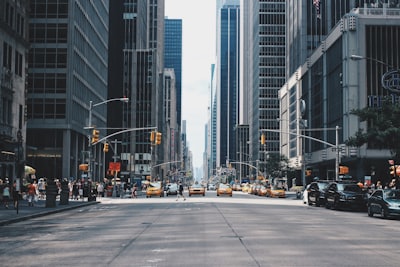
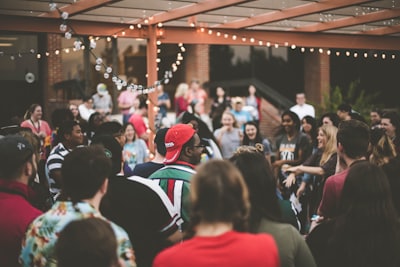
<img src> — the hue-shift + neon borders blend any night/city shot into the synthwave look. Free photos at Unsplash.Characteristics & components
The signals that make a design read as retrofuturist:
Vintage future concepts Chrome effects Space themes
Components to build
A glowing button, a sunset gradient panel, a neon-edged card, and a CSS planet — live first, then the code.
Online · nominal
<button class="glow">Launch</button>
<div class="sky"></div>
<div class="fcard"><strong>Module-7</strong></div>
<div class="planet"></div>
/* glowing button */
.glow { background:transparent; color:#00e5ff; border:2px solid #00e5ff; border-radius:8px;
  box-shadow: 0 0 12px rgba(0,229,255,.7), inset 0 0 12px rgba(0,229,255,.3);
  text-shadow: 0 0 8px rgba(0,229,255,.8); }

/* sunset gradient background */
.sky { background: linear-gradient(180deg, #2d0b4e, #6a1b6a 55%, #ff2d95); }

/* futuristic card: dark + neon edge + chrome title */
.fcard { background:#0c0a1e; border:1px solid #ff2d95; box-shadow: 0 0 16px rgba(255,45,149,.4); }
.fcard strong { background: linear-gradient(180deg,#fff,#b8c6db,#fff);
  -webkit-background-clip: text; background-clip: text; color: transparent; }

/* CSS planet */
.planet { width:80px; height:80px; border-radius:50%;
  background: radial-gradient(circle at 32% 30%, #ffe14d, #ff2d95 60%, #6a1b6a);
  box-shadow: 0 0 40px rgba(255,45,149,.6); }
Do & don't
Do
- Keep body text readable — glow the headings, not paragraphs
- Commit to one era's palette & mood
- Use effects as accents, not on everything
- Lean on pure-CSS glow/grids to stay light
- Offer reduced-motion for animated scanlines
Don't
- Set whole paragraphs in glowing neon
- Pile every effect on at full strength
- Let low contrast make text unreadable
- Use heavy flicker that could trigger seizures
- Forget mobile — grids can overflow
The takeaway
Retrofuturism is built from a handful of CSS effects: layered shadows for neon, gradients for chrome and sunsets, perspective transforms for the grid floor, and scanline overlays for that CRT glow. Pick an era, use the effects as bold accents, and keep your text readable — then your page feels like the future, as dreamed up in the past.